
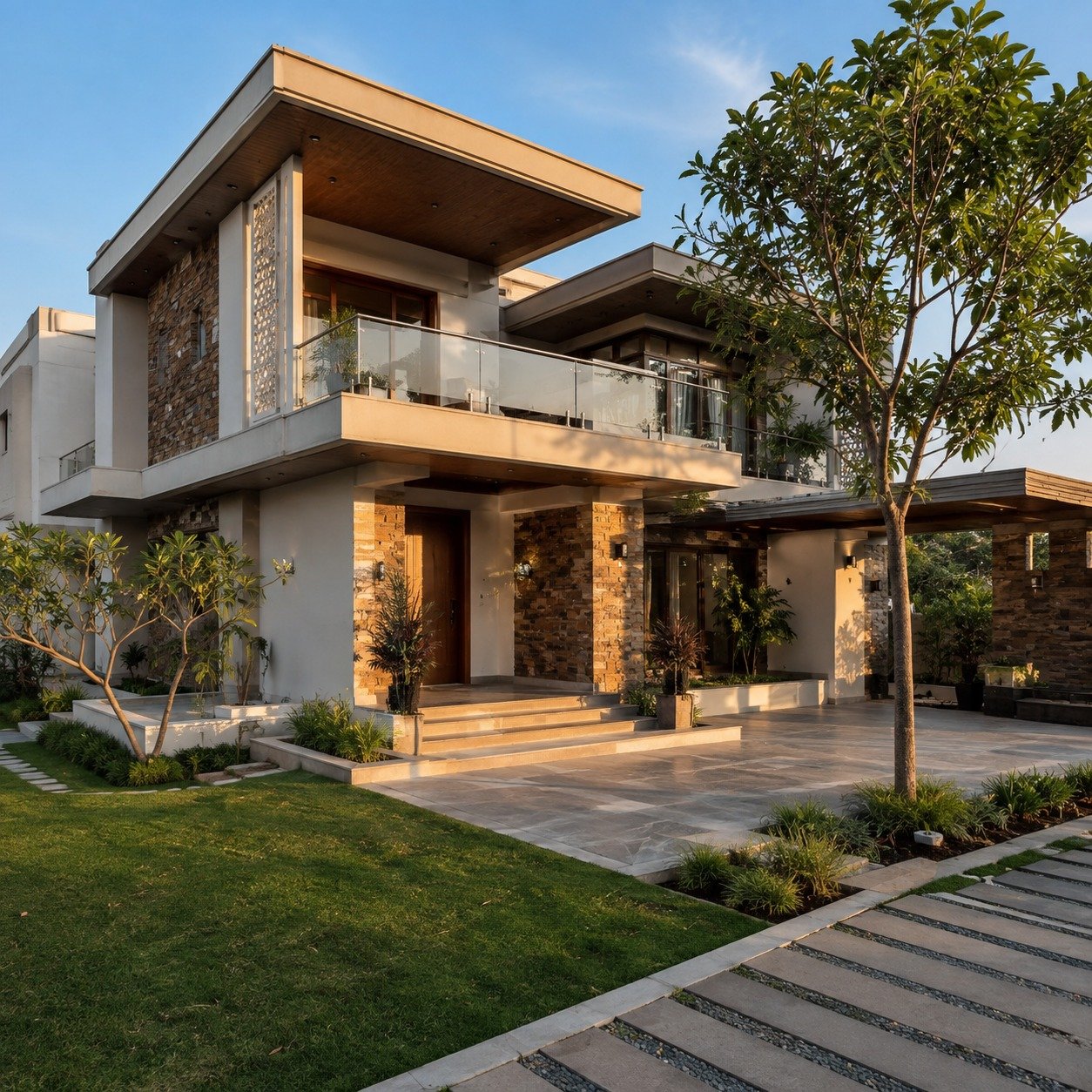
Good architecture reduces maintenance costs by solving potential problems before they become expensive repairs. A well-designed house is not simply attractive; it is planned to handle heat, rain, ventilation, water drainage, daily use and future maintenance efficiently. For homeowners in Jaipur and across Rajasthan, this can make a significant difference to the cost of owning a home over many years.
When building a house, people often focus on construction cost, elevation design, flooring and interiors. But an equally important question is: how much will this house cost to maintain after 5, 10 or 20 years?
That is where thoughtful architecture becomes a long-term investment.
Why Does Good Architecture Reduce Long-Term Maintenance Costs?
Good architecture reduces maintenance costs because it considers how a building will perform throughout its life, not just how it will look on handover day.
The design can influence how much direct sunlight reaches walls, how rainwater moves away from the building, how easily plumbing can be accessed and how naturally rooms receive air and daylight.
The National Building Code of India (NBC) includes provisions covering building services, natural ventilation, drainage, sustainability and asset and facility management, showing why these considerations belong in the planning stage rather than being treated as afterthoughts.
Here are seven practical ways good architecture can lower future maintenance requirements.
1. Good Architecture Reduces Maintenance Costs Through Better Water Management
Water is one of the biggest enemies of a building.
Poorly planned terraces, balconies, bathrooms and external drainage can result in seepage, damp walls, damaged paint, mould and deteriorating finishes.
Good architecture reduces maintenance costs by planning proper slopes, rainwater outlets, balcony drainage and protection from rainwater at the design stage.
For homes in Jaipur, where intense summer heat is followed by seasonal rainfall, protecting the building from water penetration is particularly important.
The BIS’s current building guidance also addresses rainwater harvesting and drainage as important elements of building planning.
Practical tip: Do not treat waterproofing as only a finishing activity. The roof, bathrooms, balconies and drainage system should be considered together during design.
2. Better Ventilation Can Reduce Future Problems
A house that cannot breathe properly may become uncomfortable and more dependent on mechanical cooling.
Good architectural planning can position windows, openings and internal spaces to encourage natural airflow and daylight. This can make rooms more comfortable while reducing dependence on artificial lighting and cooling.
The National Building Code specifically includes provisions for lighting and natural ventilation.
For a Jaipur home, sensible window placement, shaded openings and cross ventilation can be particularly useful during suitable weather conditions.
Good ventilation also helps control moisture in areas such as kitchens and bathrooms, reducing the possibility of dampness and related maintenance problems.
3. Smart Shading Protects Walls, Windows and Finishes
The harsh Rajasthan sun can gradually affect exterior paint, doors, windows and other exposed finishes.
A low-maintenance house design should therefore consider how much direct sunlight reaches different parts of the building.
Features such as:
- Deep balconies
- Chajjas and sunshades
- Recessed windows
- Covered entrances
- Appropriate external finishes
can help protect vulnerable surfaces.
This is one reason good architecture reduces maintenance costs without necessarily requiring expensive materials. Sometimes, the shape and placement of a building element can provide protection more effectively than repeatedly repairing the damage later.
4. Easy Access to Plumbing and Services Saves Repair Costs
Imagine a concealed plumbing problem that requires breaking tiles, walls or ceilings simply to reach a pipe.
That repair can become expensive very quickly.
Good architecture considers maintenance access before construction begins. Plumbing shafts, service areas and inspection points should be planned so that commonly maintained systems can be reached without unnecessary demolition.
This principle is also reflected in building guidance: maintenance areas and services should be designed with adequate access for maintenance work.
For homeowners, this means asking an architect a simple question:
“If something needs repair five years from now, how will the technician reach it?”
That question can prevent significant future expense.
5. Choosing the Right Materials Can Increase Building Life
Good architecture is not about specifying the most expensive material everywhere.
It is about selecting materials according to their location and expected use.
For example, areas exposed to rain, sunlight, moisture or heavy foot traffic may require more durable finishes than areas with limited exposure.
This approach works particularly well when combined with proven modern building construction techniques, which can improve durability, waterproofing, energy performance and quality control.
A slightly higher initial investment in the right material can sometimes be more economical than repeatedly replacing a cheaper product.
However, material selection should always consider the manufacturer’s specifications, installation quality, local climate and actual site conditions.
6. Simpler Design Can Mean Lower Maintenance
Complex architecture can look impressive, but every additional projection, corner, decorative element, concealed area or complicated junction can create another place where dust, water or dirt can accumulate.
This does not mean homeowners should avoid attractive architectural design.
Instead, the objective should be purposeful design.
A clean elevation with well-planned projections, accessible surfaces and sensible detailing can be easier to clean and maintain than an unnecessarily complicated façade.
This is especially useful when planning a family home where maintenance will continue for decades.
Before finalising the design, homeowners should compare the long-term practicality of different options rather than choosing an elevation only because it looks attractive in a rendering.
7. Good Planning Can Reduce Future Renovation Costs
Families change over time.
Children grow up, elderly parents may move in, work-from-home requirements can emerge and storage needs can increase.
A house designed only for today’s lifestyle may require expensive alterations later.
Good architecture reduces maintenance costs and future renovation expenses by allowing reasonable flexibility.
For example, planning electrical points, plumbing routes, storage areas and potential expansion possibilities in advance can reduce the amount of demolition required during future changes.
Similarly, homeowners comparing construction approaches can benefit from understanding the difference between turnkey construction vs hiring individual contractors, particularly when coordination between architectural design, plumbing, electrical work and construction is important.
Good Architecture Is an Investment, Not an Extra Expense
Homeowners often try to save money by reducing design costs at the beginning of construction.
But design is where many long-term decisions are made.
A well-planned house can reduce unnecessary material use, prevent avoidable construction changes, improve comfort and make future maintenance easier.
This does not mean every house needs a luxury architect or expensive features. It means the design should be based on the actual climate, site, family requirements, budget and future maintenance needs.
For homeowners planning a project, understanding the house construction cost per sq ft in Jaipur can also help balance initial construction investment against long-term value.
What Jaipur Homeowners Should Discuss With Their Architect
Before approving a house plan, ask:
- How will rainwater move away from the building?
- Are terraces and balconies properly drained?
- Is there sufficient natural ventilation?
- Which walls and windows receive strong afternoon sunlight?
- How will plumbing be accessed for future repairs?
- Are commonly maintained electrical components easily accessible?
- Which exterior materials are suitable for Jaipur’s climate?
- Can the house accommodate reasonable future changes?
- Are there unnecessary design features that will increase maintenance?
- What quality checks will be carried out during construction?
These questions can lead to a more practical and durable home.
Final Thoughts
Good architecture reduces maintenance costs because it anticipates problems instead of waiting for them to appear.
Proper drainage can reduce seepage. Shading can protect finishes. Ventilation can improve comfort. Accessible services can make repairs easier. Durable materials can extend the life of important building elements. Simpler, purposeful design can also reduce cleaning and upkeep.
For homeowners in Jaipur and Rajasthan, architecture should therefore be judged by more than its appearance.
A beautiful house is valuable.
A beautiful house that remains comfortable, durable and economical to maintain for decades is a much better investment.
FAQs About Good Architecture and Maintenance Costs
1. How does good architecture reduce maintenance costs?
Good architecture reduces maintenance costs by planning drainage, ventilation, shading, material selection, service access and building orientation before construction begins. This can reduce common problems such as seepage, excessive heat, damaged finishes and difficult repairs.
2. Is expensive architecture necessary for a low-maintenance house?
No. Good architecture does not necessarily mean expensive architecture. The goal is to make practical design decisions suited to the site, climate, budget and lifestyle.
3. How does architecture help prevent water seepage?
Proper roof slopes, balcony drainage, rainwater outlets, waterproofing details and protection from direct rain can reduce the risk of water entering vulnerable parts of the building.
4. Why is ventilation important in house design?
Good ventilation improves indoor air movement and can help manage heat and moisture. Properly positioned windows and openings can also reduce dependence on artificial lighting and cooling under suitable conditions.
5. Is a simple house design easier to maintain?
Generally, yes. A practical design with fewer unnecessary projections, complicated details and difficult-to-access surfaces can be easier and less expensive to clean and maintain.
6. Can good architecture reduce renovation costs?
Yes. Planning for future electrical, plumbing, storage and space requirements can reduce the amount of demolition and alteration required when the family’s needs change.
7. Is low-maintenance architecture suitable for homes in Jaipur?
Yes. It can be particularly useful in Jaipur because house design can respond to intense summer heat, seasonal rainfall, dust and local climate conditions. Proper shading, ventilation, drainage and durable materials can improve long-term performance.
Conclusion
When planning a new home, do not ask only “What will it cost to build?”
Also ask:
“What will it cost to maintain?”
That change in thinking can lead to better architectural decisions, fewer avoidable repairs and a home that delivers greater value over its lifetime.