
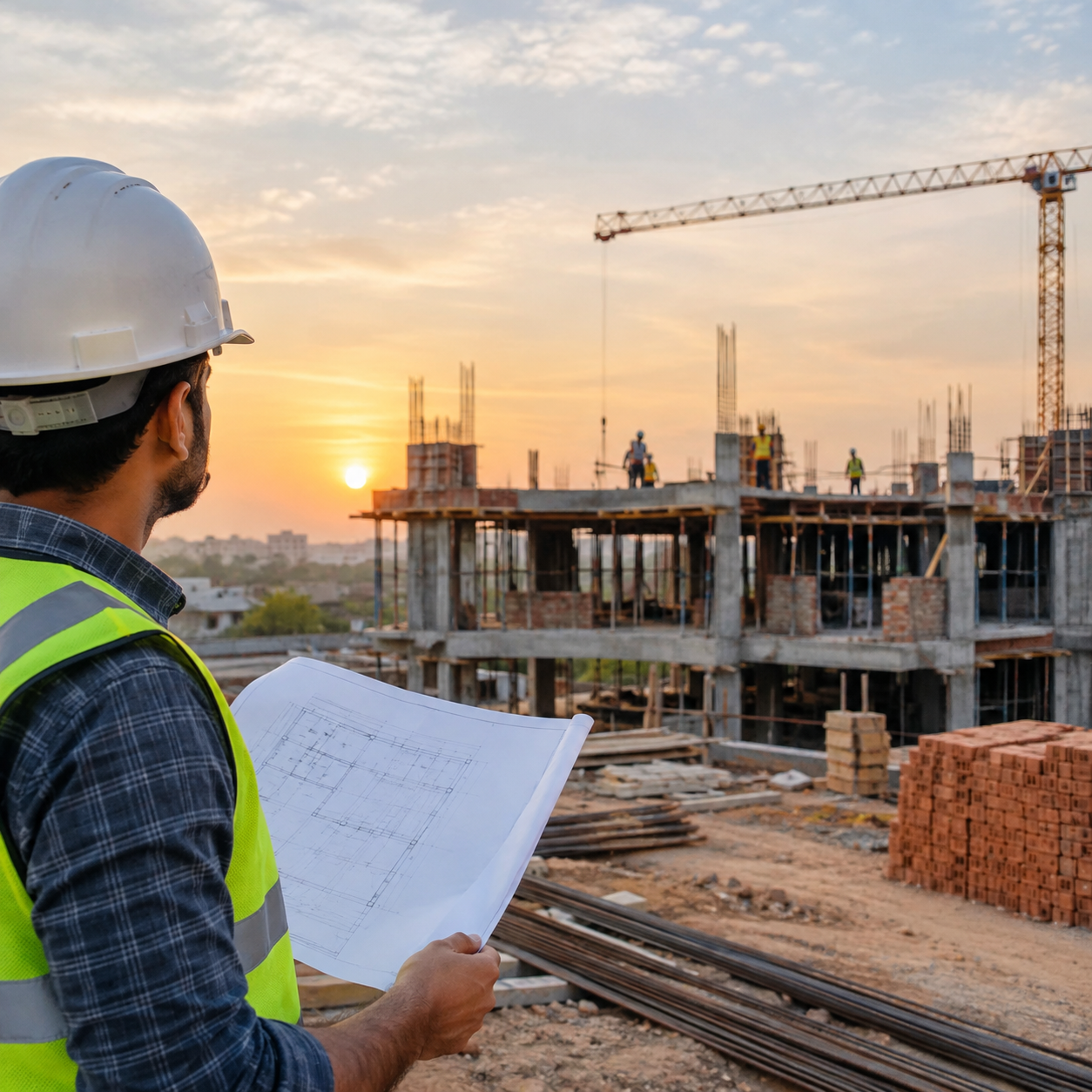
If you are building your own house, you may eventually wonder, why home construction takes so long even when the work appears to be progressing every day. The answer is that constructing a home involves much more than putting up walls and installing doors. Planning, approvals, structural work, curing, electrical and plumbing work, flooring, painting and finishing all have to happen in the right sequence.
For homeowners in Jaipur and across Rajasthan, weather, labour availability, material supply and design changes can also affect the home construction timeline.
A realistic timeline is therefore not simply about working faster. It is about planning better, coordinating different activities and avoiding unnecessary rework.
Why Home Construction Takes So Long: 7 Common Reasons
1. Planning and approvals take time
Before construction begins, several decisions need to be completed. These can include the architectural plan, structural design, material specifications, budget and applicable approvals.
The National Building Code of India covers areas such as development controls, structural design, construction practices, safety and building services. BIS also provides a dedicated guide for homeowners constructing an independent house, making it clear that construction involves several stages beyond the physical work on site.
Starting construction before important decisions are finalised can create problems later.
Practical tip: Finalise drawings, specifications, budget and major materials before starting major site work.
2. Design changes cause avoidable delays
One of the biggest reasons for a slow house construction process is changing decisions after work has already started.
For example, changing the location of a bathroom after plumbing lines are installed can mean breaking and redoing work. Moving a window after masonry is complete can similarly affect several activities.
Small changes may appear harmless individually, but several changes together can add significant time.
If you are selecting a contractor, asking the right questions before signing an agreement can help establish responsibilities, timelines and communication procedures. Our guide on 11 Powerful Questions Before Hiring a Contractor can be linked here.
Practical tip: Freeze the basic floor plan and major specifications before construction begins.
3. Construction work has a natural sequence
A house cannot be completed by doing everything simultaneously.
Typically, construction progresses through stages such as:
Site preparation → foundation → structure → walls → electrical/plumbing → plaster → flooring → doors/windows → painting → fixtures → final finishing
Each stage can depend on the previous one being sufficiently complete.
Trying to rush one stage without considering the next can actually create rework rather than saving time.
This is one reason homeowners should ask for a construction schedule instead of simply asking, “When will my house be ready?”
4. Quality work sometimes requires waiting
Not every waiting period means that workers are wasting time.
Concrete, for example, requires proper curing. CPWD specifications state minimum curing periods for concrete and note that hot, dry conditions can require particular attention to curing.
This is especially relevant in Rajasthan, where summer temperatures can be high.
Cutting short essential processes simply to finish the house earlier can affect long-term performance.
Homeowners can also use the waiting periods productively by checking upcoming materials, confirming finishes and preparing for the next construction stage.
Practical tip: Ask your contractor which waiting periods are necessary for quality and which are caused by poor planning.
5. Material availability can slow down the project
A construction site depends on a continuous supply of materials.
Cement, steel, bricks or blocks, tiles, sanitaryware, electrical products, doors, windows, paint and hardware may come from different suppliers. If an important item is unavailable when required, the next activity may have to wait.
Finishing materials can be particularly problematic because homeowners often select them late.
Practical tip: Finalise long-lead items early and maintain a simple material procurement schedule.
6. Labour and coordination affect the timeline
A residential project may involve masons, carpenters, electricians, plumbers, painters, fabricators, tile installers and several other workers.
If these teams are not properly coordinated, one team may finish its work and remain idle while waiting for another.
Good project management therefore matters as much as the number of workers on site.
A larger workforce does not automatically mean faster construction if activities are poorly coordinated.
Practical tip: Ask for regular progress updates and make sure the next week’s activities are planned in advance.
7. Finishing work often takes longer than homeowners expect
When the structure is complete, many homeowners feel that the house should be nearly finished.
In reality, the finishing stage can include:
- Flooring and skirting
- Bathroom and kitchen installation
- Doors and hardware
- Electrical fixtures
- Plumbing fixtures
- Painting
- False ceiling, where applicable
- Railings and fabrication
- Waterproofing-related finishing
- External development
- Cleaning and snag correction
This is why the final portion of a house construction timeline can sometimes feel surprisingly slow.
Before handover, it is also important to inspect the completed work rather than focusing only on the completion date. You can link your article Construction Quality of a Built House: 9 Smart Checks for a Better Home here as a practical follow-up resource.
How Long Does It Take to Build a House in India?
There is no single timeline that applies to every house.
The duration depends on factors such as:
- Plot size and site conditions
- Built-up area
- Number of floors
- Design complexity
- Approval requirements
- Construction method
- Material availability
- Labour availability
- Weather
- Level of interior finishing
- Frequency of design changes
- Contractor and project management
For a straightforward independent home, construction may take several months, while larger or more detailed homes can take considerably longer.
The important question is therefore not simply “How many months will my house take?”
A better question is:
“What is the planned timeline for each stage, and what could delay it?”
How to Reduce Home Construction Delays
If you want to complete your home efficiently, focus on preparation rather than simply asking workers to move faster.
Make decisions early
Finalise the floor plan, electrical points, plumbing requirements, flooring and major finishes before they become urgent decisions.
Maintain a written schedule
A stage-wise schedule makes it easier to identify delays early.
Plan material purchases
Do not wait until the last moment to order products needed for upcoming work.
Avoid frequent changes
Every change should be evaluated for its impact on cost and time.
Monitor quality during construction
Fixing a problem immediately is generally easier than discovering it after several subsequent layers of work have been completed.
For homeowners considering a premium project, our article on 5 Smart Mistakes to Avoid When Building a Luxury Villa in Jaipur can be linked naturally here.
Why Rushing Home Construction Can Be a Mistake
It is understandable to want your new home completed quickly. You may be paying rent, have temporary accommodation or simply want to move into your dream home.
However, faster construction is not always better construction.
Important activities such as structural work, curing, waterproofing, electrical installation and plumbing should be completed properly. CPWD specifications, for example, emphasise curing and workmanship as factors affecting concrete durability.
The goal should therefore be efficient construction, not construction at any cost.
A well-managed project reduces unnecessary waiting while still allowing sufficient time for work that needs it.
A Better Way to Think About Your Construction Timeline
Instead of looking at construction as one long waiting period, divide it into measurable stages.
For example:
Planning → Approval → Foundation → Structure → Masonry → Services → Plaster → Flooring → Finishing → Inspection → Handover
This makes it easier for homeowners to understand where the project currently stands and whether a delay is genuinely unavoidable.
BIS also describes the National Building Code as covering construction management, practices and safety along with structural design and building services.
For a homeowner, this reinforces an important point: building a house is a coordinated process, not just a series of individual construction jobs.
FAQs About Home Construction Time
Why home construction takes so long?
Home construction takes time because multiple activities have to be completed in sequence. Approvals, design finalisation, foundation and structural work, curing, electrical and plumbing work, finishing, material supply and inspections can all affect the timeline.
How long does it take to build a house in Jaipur?
The time varies according to the home’s size, number of floors, design complexity, approval requirements, materials, weather, labour and finishing specifications. A realistic schedule should be prepared specifically for the individual project.
What causes the most construction delays?
Common causes include late design decisions, frequent changes, material shortages, poor coordination, labour availability, approval delays and rework caused by quality issues.
Can home construction be completed faster?
Yes, avoidable delays can often be reduced through detailed planning, early material selection, clear drawings, proper scheduling and good coordination. However, essential construction and curing periods should not simply be eliminated to meet an artificial deadline.
Should homeowners visit the construction site regularly?
Regular site visits can help homeowners understand progress and identify questions early. However, inspections should ideally be combined with proper technical supervision and documented progress rather than relying only on visual checks.
Final Takeaway
If you are asking why home construction takes so long, remember that a quality home is built through many interconnected stages. Some delays are avoidable, while others are necessary for proper construction.
The smartest approach is to plan early, freeze major decisions, coordinate materials and labour, monitor quality and maintain a realistic construction schedule.
For homeowners in Jaipur and Rajasthan, choosing an experienced construction team that understands local site conditions, climate and construction practices can make the process more organised and predictable.
The objective should not be to build a house as quickly as possible. It should be to build it efficiently, correctly and with fewer avoidable delays.